

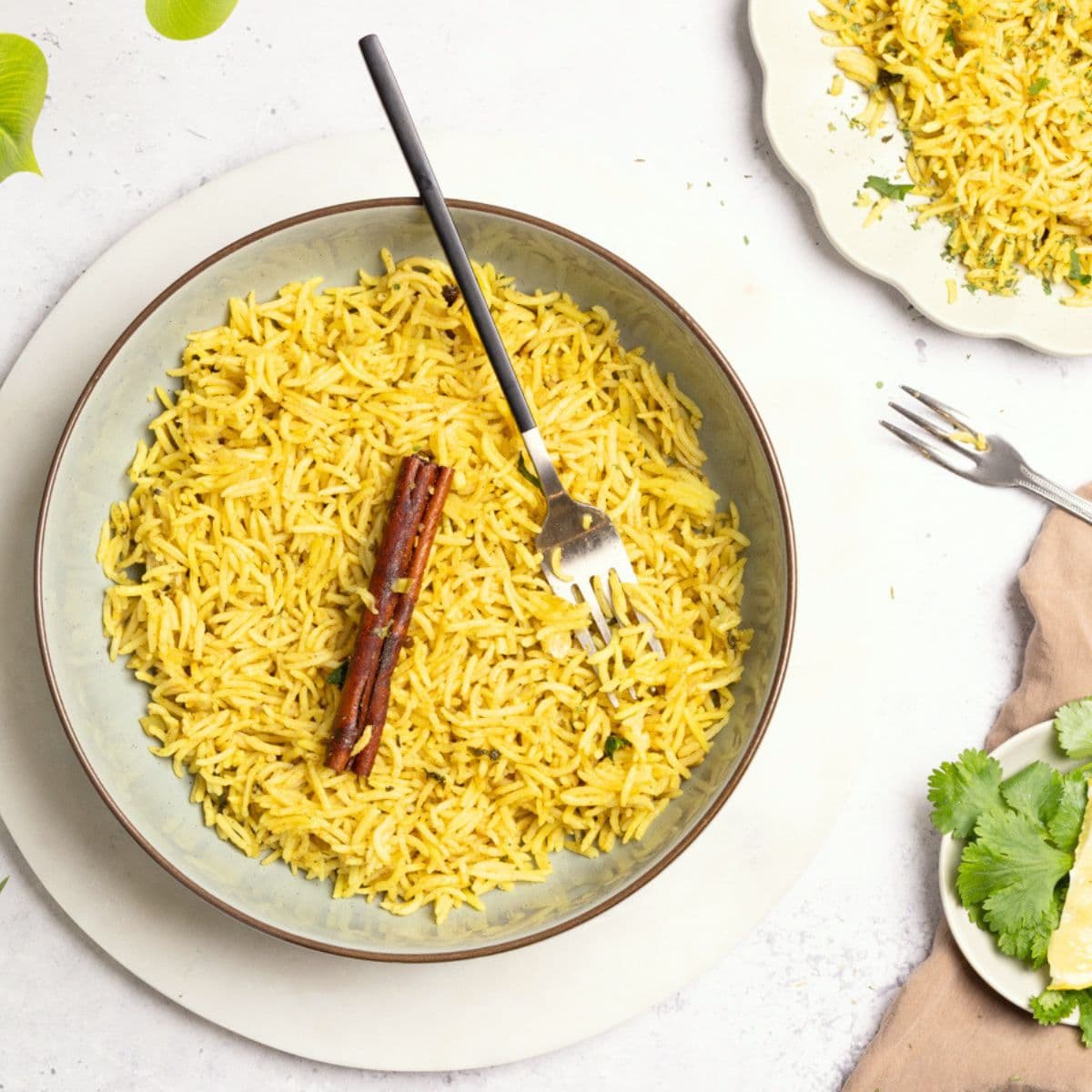
If you grew up in a Somali home, you are really familiar with the smell of Bariis (Somali Rice) cooking as soon as you opened the front door. That mix of garlic cloves, cinnamon, cardamom, and cumin coming off the stove is one of those nostalgic smells for every Somali kid.
This rice recipe is quick, easy, and bursting with amazing flavors from the added herbs and spices. A deliciously savory dish that can be eaten on its own and goes pretty well as a side with anything, too.
This is my go-to version and I kept it super simple. The whole dish comes together in about half an hour!
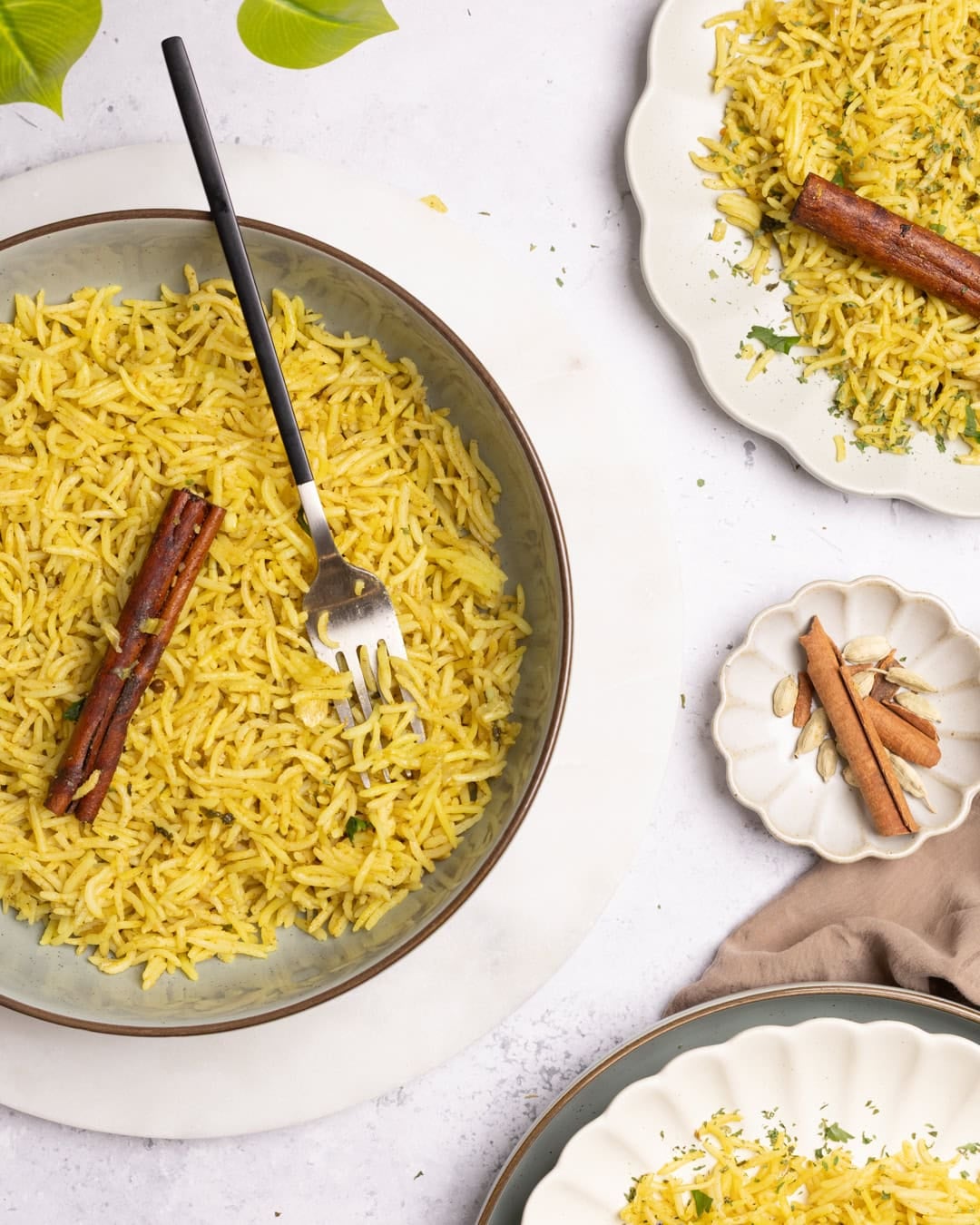
Even with a simple ingredient list, this Bariis recipe is still packed with flavor. Once you make, it you’ll understand why this rice is on every Somali dinner table.
What is Somali Bariis?
Bariis is Somali spiced rice. It’s one of those dishes that I think every Somali person has a memory attached to, whether it’s helping make it as a kid or being the one at the table who always went back for seconds. It’s usually served alongside chicken suqaar, slow-cooked meat, or even roasted veggies.
There are many different ways to make Somali rice but this recipe is a simplified version perfect for weeknight dinners. Although traditionally cooked with meat broth, I know we usually don’t have fresh meat broth lying around all the time. For this Bariis recipe, I used Vegeta seasoning but you can easily substitute with chicken bouillon or store bought broth.
Why you’ll love this recipe:
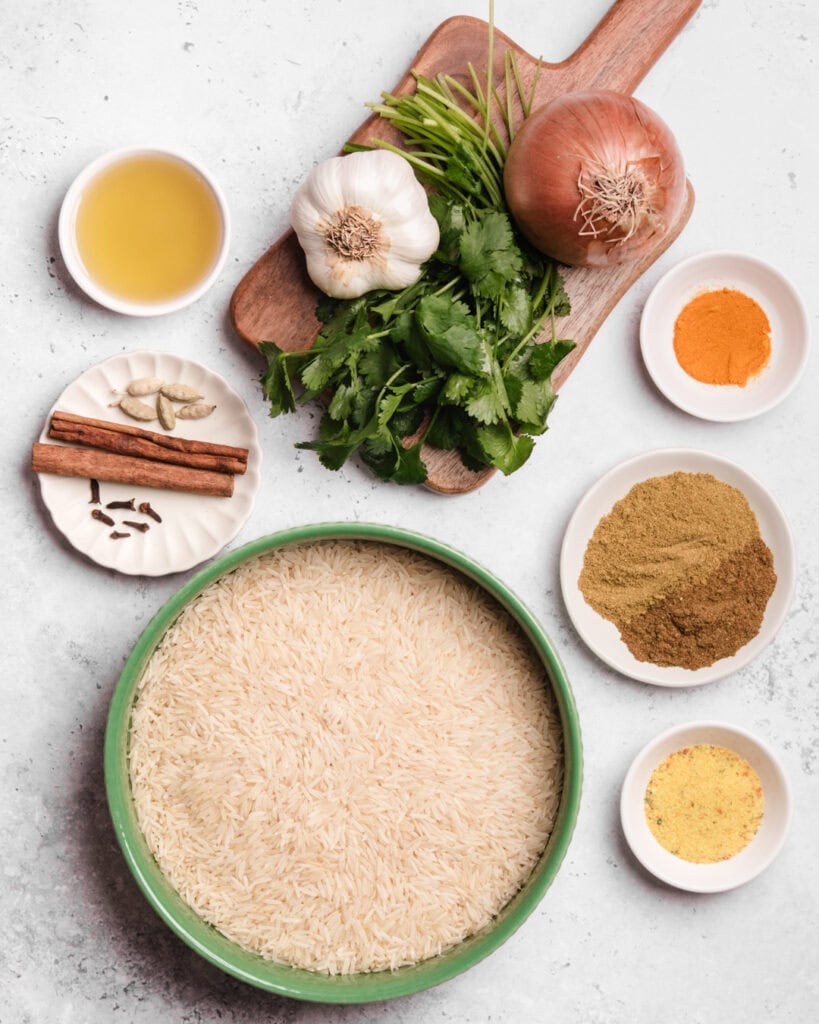
the spice blend (xawaash)
Xawaash (pronounced Ha-waash) is a spice blend used in a lot of savory Somali dishes. The word in Somali means “spices”, sometimes spelled as “Xawaaji” depending on what region you’re from.
Every Somali family has their own version but the base is usually a mix of cumin, coriander, turmeric, cardamom, cinnamon, and cloves.
For this recipe we’re building our own version right in the pot, toasting each spice in the oil so the flavors bloom before anything else goes in.
How to make Somali Bariis
The process is pretty simple once you have all your ingredients prepped. You’re basically toasting all your ingredients in a large pot, adding your water, bringing it to a boil and then let it cook undisturbed.
Full measurements and steps are in the recipe card below.
Instructions
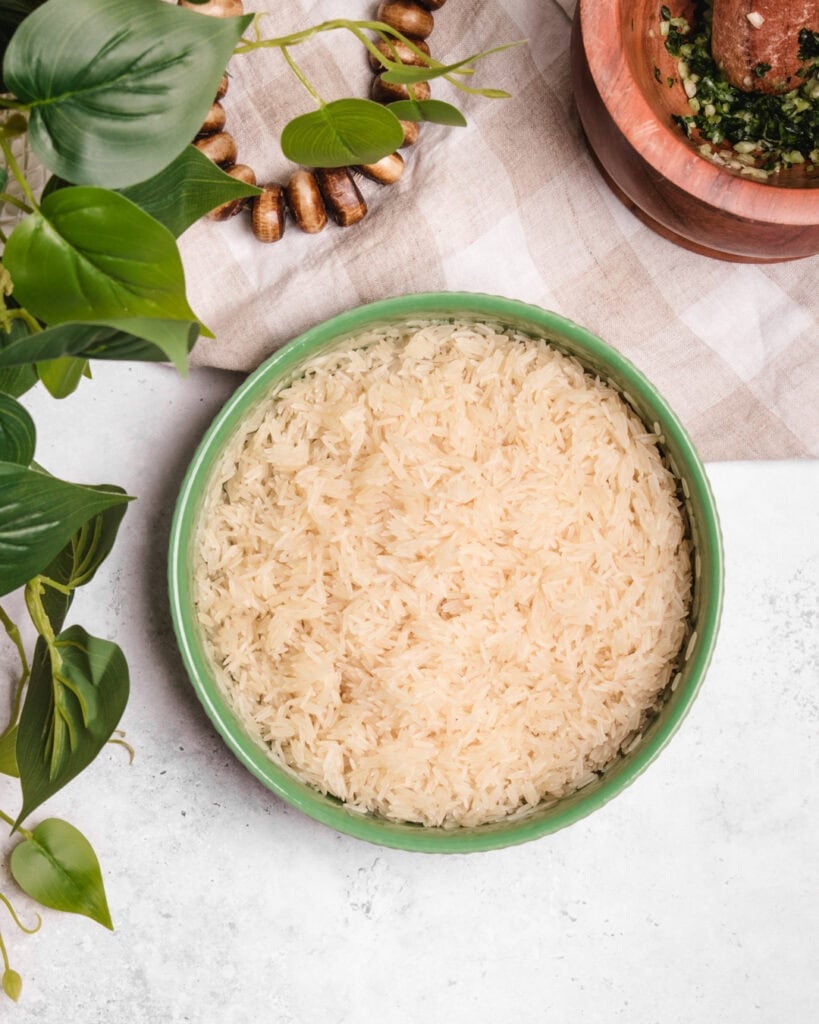
Rinse your basmati rice under cold water until the water runs completely clear. This removes the extra starch from the rice and helps the grains stay fluffy and separate. Drain well and set aside.
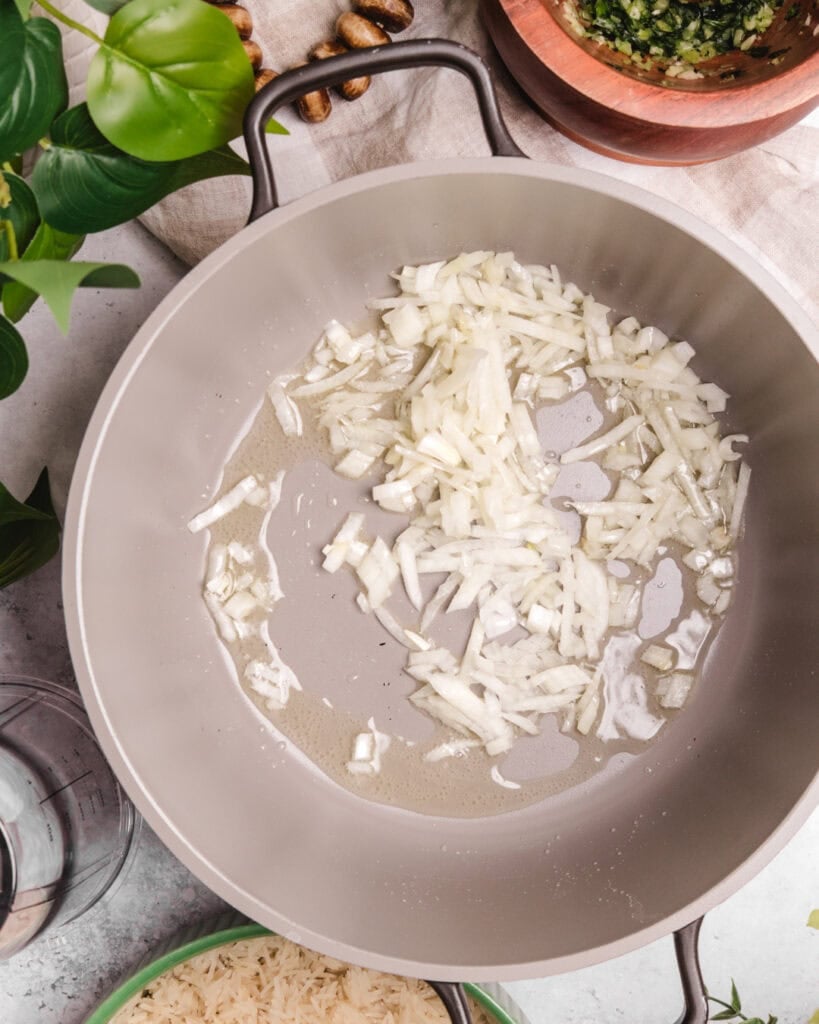
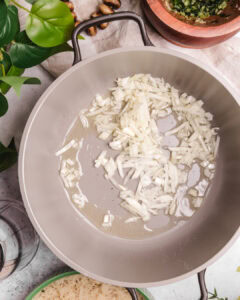
Heat the oil in a large pot over medium-high heat. Add your diced onions and cook for a few minutes until they’re soft and translucent. Keep the heat moderate and don’t let them burn!
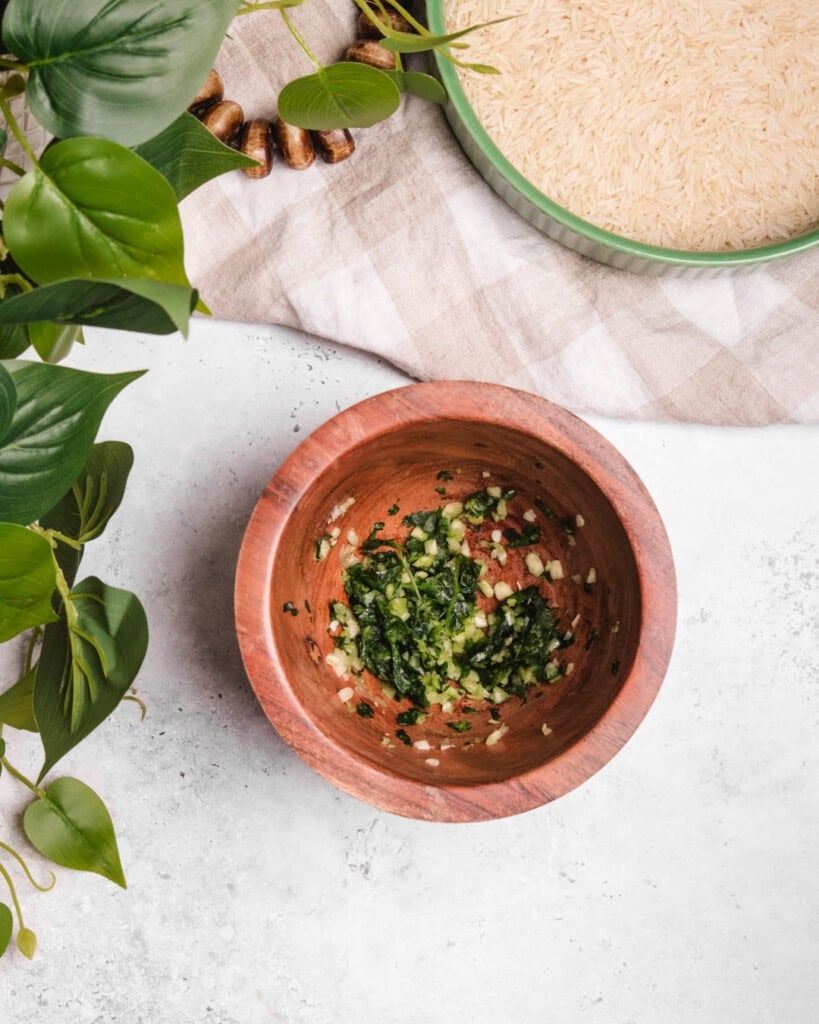
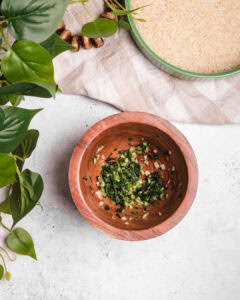
Now for the garlic and cilantro. The traditional Somali way is to pound them together in a mortar and pestle into a rough paste before adding them to the pot.
Growing up we always had a mortar set aside just for this, and even now in my own home that hasn’t changed. If you don’t have one, just mince both finely and add them straight into the pot.
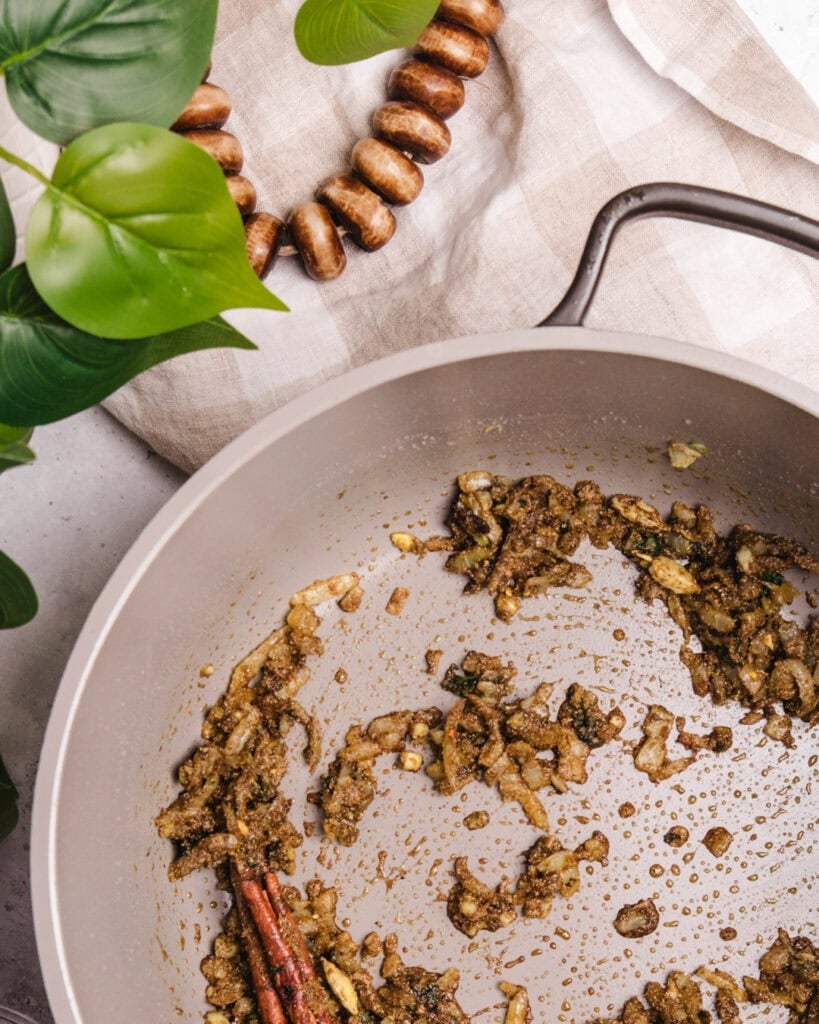
Stir the cilantro and garlic mix into the onions and sauté for another 2–3 minutes until fragrant.
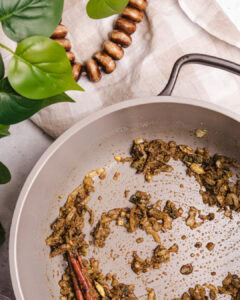
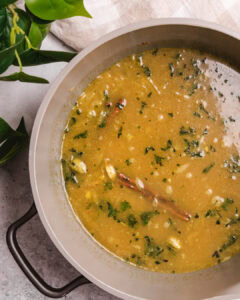
Add all your spices along with the Vegeta seasoning, or if you’re using a stock cube instead of Vegeta go ahead and crumble that in now.
Toast all the spices for another 1-2 minutes.
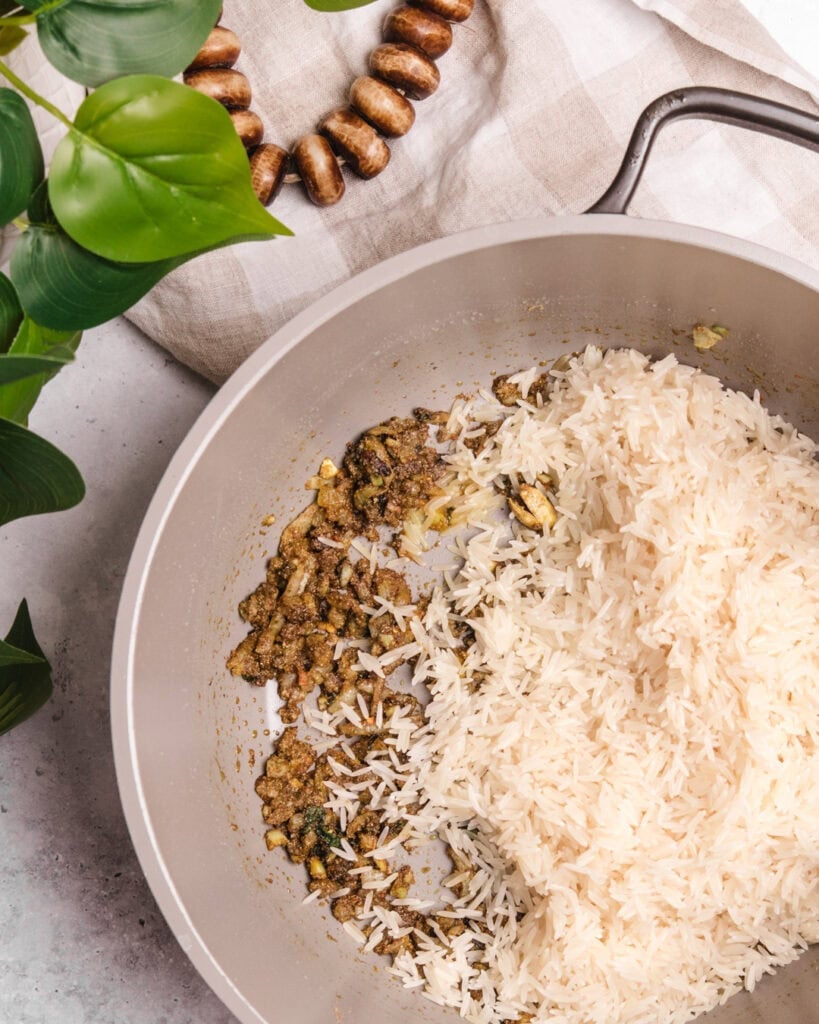
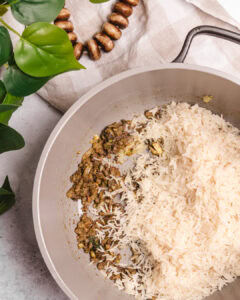
Pour in the drained rice and mix well so every rice grain gets coated with the toasted spices. Toast and stir for 2-3 minutes, making sure the rice does not burn.
Add the water. Give everything a good mix then bring it all to a boil.
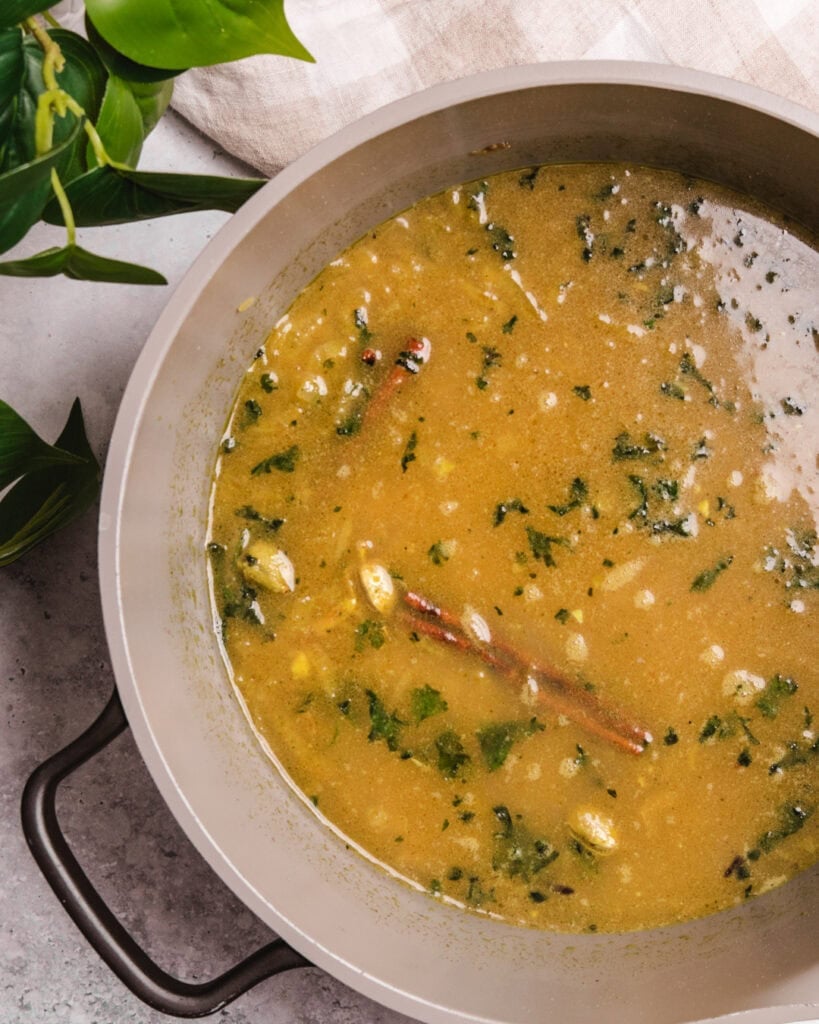
Once it’s boiling, turn the heat down as low as it goes. Cover the pot with a tight-fitting lid and leave it completely undisturbed for 15 minutes.
Please don’t lift that lid even once.
The rice cooks entirely on trapped steam and every time you open it that steam escapes and the rice won’t cook evenly.
When the timer goes off, turn off the heat but keep the lid on for another 5 minutes.
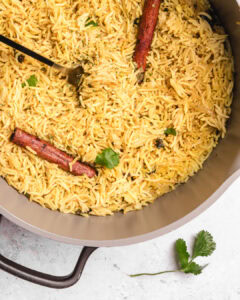
Now take the lid off and use a fork to gently fluff the rice.
recipe tips
Please don’t skip the spice toasting step! I know it might seem like a small thing but those 1-2 minutes of toasting before the rice goes in makes such a difference in flavor. If your kitchen doesn’t smell amazing, give it another 30 seconds.
Keep that lid on! Once the lid goes on the pot, don’t touch it. Not even a quick peek. We want the steam to build up inside the pot and cook the rice evenly. If you let it out, you’ll get unevenly cooked rice. Set a timer and walk away.
About the whole spices: The cloves, cinnamon sticks, and cardamom pods are there for fragrance and flavor but they’re not meant to be eaten. You can pull them out before serving or just leave them in and let everyone know to set them aside when they find one.
Want it a little richer? Try swapping one cup of the water for chicken broth. It adds another layer of depth to the rice.
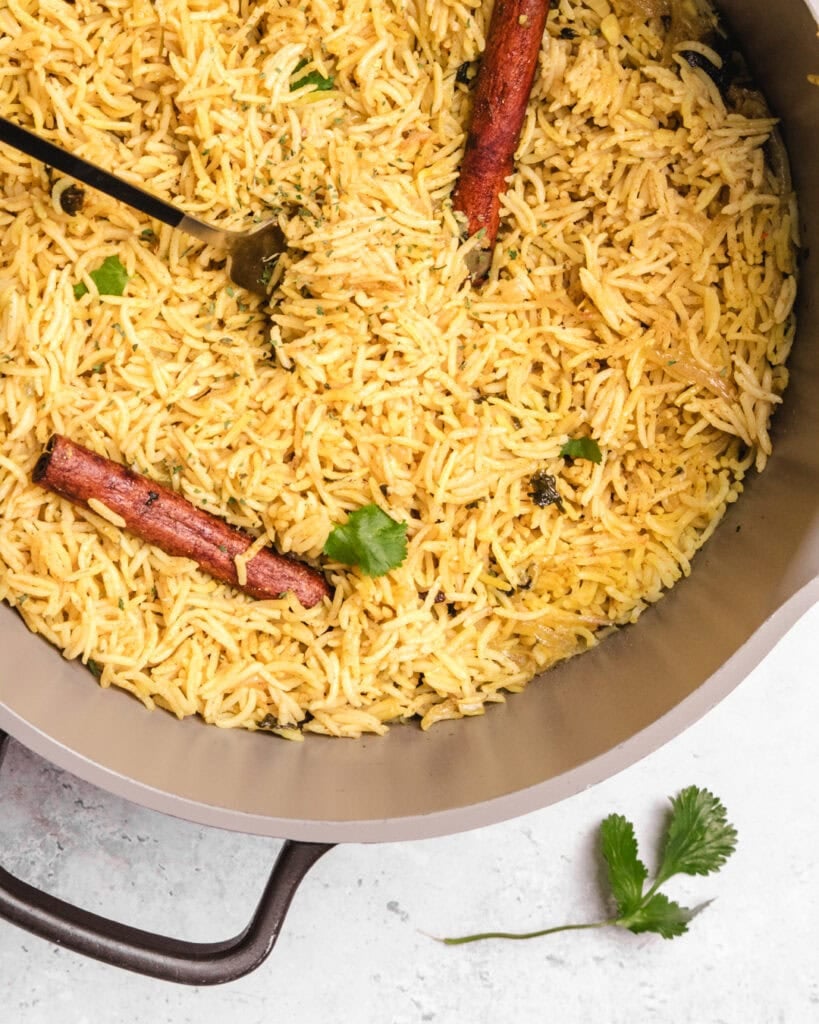
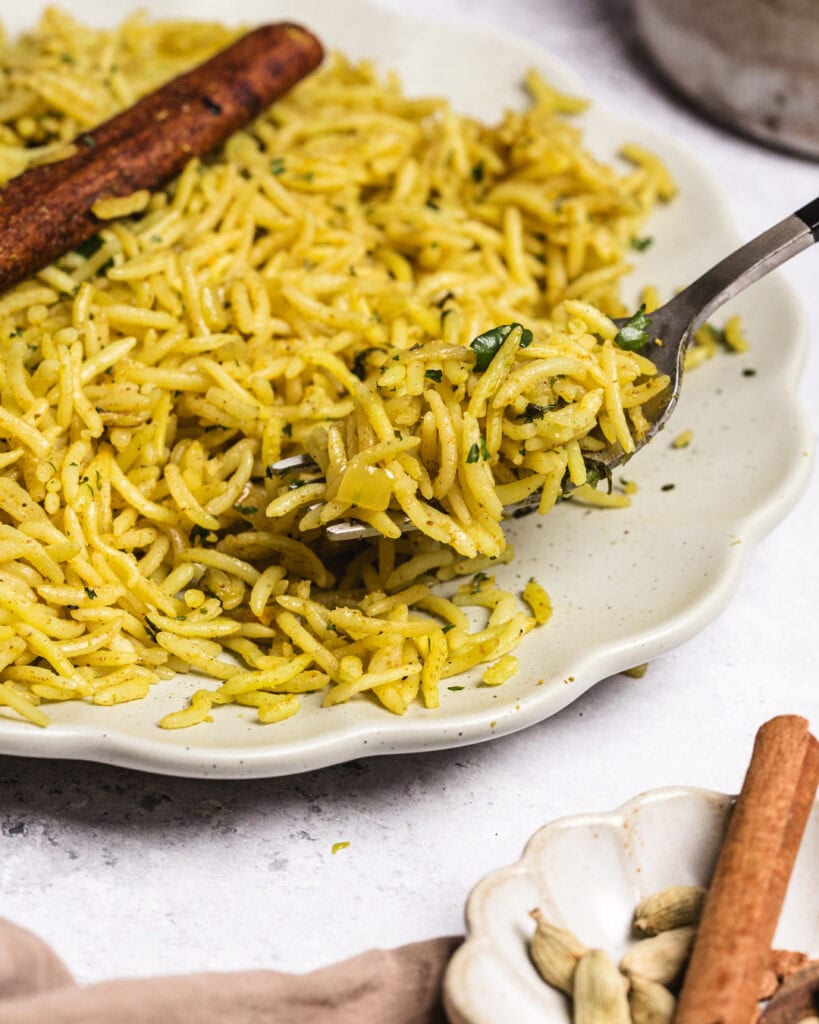
How to Serve Bariis
My favorite way to serve this is with chicken suqaar (stir fry) or slow-cooked hilib (meat) but it’s also really good alongside any side of your choice.
Do not let your rice sit out at room temperature. Cooked rice is a common source of food poisoning. The sooner you can get it into a fridge after it cools down the better!
Bariis reheats really well too. Store leftovers in an airtight container in the fridge for up to 3 days. To reheat, cover the plate and reheat in the microwave for at least 1-2 minutes depending on portion size.
frequently asked q’s
Do I need to rinse the rice before cooking?
Yes, always rinse your basmati rice until the water runs completely clear. This washes off the excess starch that can make the rice sticky and clumpy. It only takes a minute and really does make a difference in the final texture.
Can I use a chicken stock cube instead of Vegeta?
Absolutely! A chicken stock cube works great here, just crumble it right into the pot when you add the water. Vegeta is what I use in my recipe video, but the stock cube is a great substitute and equally delicious.
Can I use a different type of rice?
I’d really recommend sticking with long-grain basmati. It’s what gives Bariis that fluffy texture where the grains stay separate and light. Short or medium grain rice absorbs liquid differently and the end result just won’t be the same dish.
My rice turned out mushy. What happened?
Most likely one of two things: either there was too much water in the pot or the lid came off while the rice was steaming. Stick to 3 cups of water for every 2 cups of rice and once that lid goes on, leave it alone for the full 15–18 minutes. The rice really needs that uninterrupted steam to cook evenly.
Try serving this deliciously spiced East African rice as a side for your next family dinner. I promise everyone will absolutely love it!
If you do end up trying this recipe, I’d love to see how it turns out! Tag me on Instagram or TikTok so I can find it.
Did you make this recipe?
We’d love to see! Tag @5adiyahs on Instagram! #5adiyahs

30 Minute Bariis – Easy Somali Rice Recipe
Ingredients
Spice Blend
- 1 tablespoon Ground cumin
- 1 tablespoon Ground coriander
- 1/2 teaspoon Turmeric
- 4-5 Whole cloves
- 2 Cinnamon sticks
- 4-5 Cardamom pods
For the Rice
- 2 tablespoons Neutral oil
- 1 large Onion diced
- 2 Garlic cloves
- 1/4 cup Fresh cilantro
- 2 teaspoon Vegeta Seasoning (or 1 chicken stock cube)
- 2 cups Basmati Rice rinsed
- 3 cups Water
Instructions
- Rinse your basmati rice under cold water, swirling it around until the water runs completely clear. This removes the excess starch and helps the grains stay fluffy and separate. Drain well and set aside.

- Heat the vegetable oil in a large saucepan over medium heat.
- Add your diced onion and let it cook for about 5 minutes until it's soft and translucent. Keep the heat moderate and don't let the onions burn
- For the garlic and cilantro, the traditional Somali way is to pound the garlic cloves and cilantro together in a mortar and pestle into a rough paste before adding them to the pot. If you don't have a mortar and pestle, just mince both finely and add them straight in with the onions.
- Stir the garlic and cilantro into the onion and cook for an additional minute until fragrant.
- Add all the spices: cumin, coriander, turmeric, cloves, cinnamon sticks, and cardamom. Stir in your Vegeta seasoning (or crumble in the stock cube if using that instead). Stir everything together and let it toast for 1–2 minutes.
- Pour in the drained rice and stir it around so every rice grain gets coated. Let it toast for 2–3 minutes, stirring the whole time, until some grains turn lightly golden.
- Add 3 cups of water. Give everything a good stir then bring it all to a boil.
- Reduce to the lowest heat and let the liquid come to a gentle simmer. Cover the pot with a tight-fitting lid and leave it completely undisturbed for 15 minutes. Please don't lift that lid even once. The rice cooks entirely on trapped steam and every time you open it that steam escapes and the rice won't cook evenly.
- When the timer goes off, turn off the heat but keep the lid on for another 5 minutes. That resting time is really important for getting those fluffy separate grains.
- Now take the lid off and use a fork to gently fluff the rice. Optionally, finish with a little fresh cilantro on top and serve warm.


Do you use white or green cardamom pods?
Im looking forward to trying this recipe out tomorrow
I use green cardamom pods! Good luck I hope you enjoy it!!